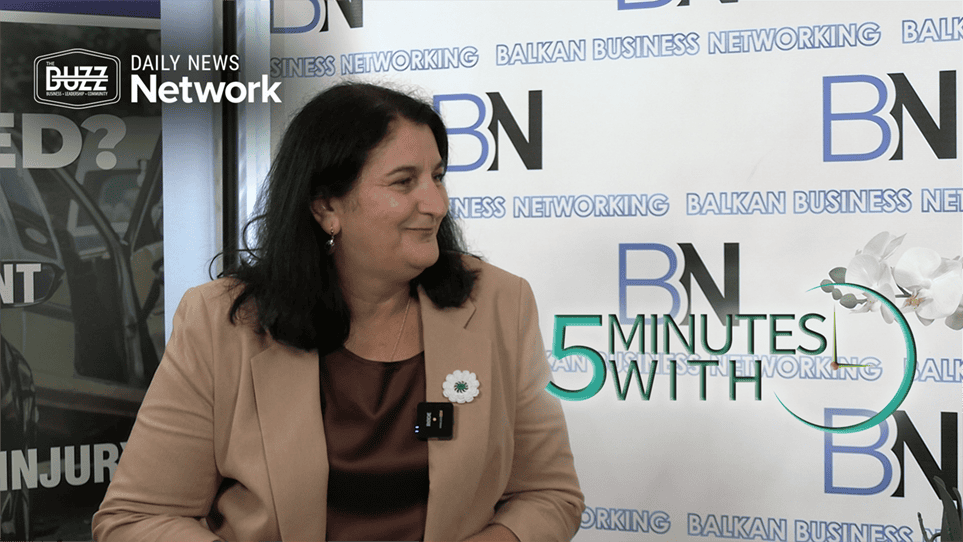
Five Minutes With Dan Rudez with guest Ajkuna Atic of AA Trucking LLC
General News
Remembering Srebrenica: Listening, Supporting, and Standing Together as a Community
Some stories are difficult to tell — but they are essential to hear.
At a recent Srebrenica Bosnian Conference in Jacksonville, members of the community gathered not only to remember history, but to ensure that the truth continues to be shared. Among those present was Aika Akage, a survivor of the Srebrenica genocide, whose courage and commitment to speaking openly serve as a reminder that remembrance is an ongoing responsibility.
A Survivor’s Voice
Aika survived the genocide in Srebrenica and worked in a war hospital from 1992 to 1995. When the city fell, she was forced to flee through the woods toward Tuzla — a journey that took six days under unimaginable conditions. Like many survivors, her experiences did not end when the war ended.
Today, she dedicates herself to telling the truth about what happened — both in Bosnia and across Europe and North America — through memorial centers, conferences, and community gatherings. Her mission is clear: to ensure that the stories of survivors are not forgotten, and that silence does not erase history.
Breaking the Silence
One of the most powerful messages shared at the conference was the importance of encouraging survivors — especially women — to speak openly about their experiences. Many endured detention, violence, and trauma, yet remain silent decades later due to shame, fear, or lack of support.
Aika emphasized that speaking is not weakness. What happened was not a choice — it was something imposed upon them. Today, she works to encourage women to come forward, to share their stories without shame, and to understand that healing begins with being heard.
The Role of Community Support
Healing, she explained, does not happen alone. Family support is often the first step. Beyond that, community organizations, therapy groups, educational sessions, mosques, schools, and cultural centers all play a vital role. Whether through one-on-one conversations or group discussions, creating safe spaces for expression helps survivors realize they are not alone.
Srebrenica, she reminded everyone, is not just history — it is an ongoing reality for many who live with its impact every day.
Why This Matters Locally
For Dan Rudez, these conversations are deeply personal. With family roots in Croatia and lifelong ties to the region, the war in the Balkans was a defining experience. Witnessing the atrocities — and the world’s silence — shaped his lifelong commitment to advocacy and standing up for those who feel unheard. That commitment carries into his work today. At Rudez Law, supporting the community means listening first — understanding people’s experiences, their fears, and the realities they face when life takes an unexpected turn.
Support When People Are Vulnerable
Several community members shared personal stories of injury and uncertainty — moments when fear, confusion, and pain intersected. What stood out wasn’t just legal representation, but human reassurance: calls answered, guidance given, and someone taking the time to explain what to do next.
That approach reflects a broader philosophy rooted in service. Inspired by a family legacy where helping others was a way of life, the firm strives to do the things others won’t — especially when people feel overwhelmed or alone.
Standing With the Community
Events like the Srebrenica conference are not just about remembrance — they are about responsibility. Responsibility to listen. Responsibility to support. Responsibility to stand together as a community. Rudez Law’s involvement in these conversations reflects a simple belief: justice and support extend beyond the courtroom. They live in community spaces, shared stories, and the willingness to stand beside people during their most difficult moments.
Here Like Family
For the Susreti community and beyond, the message remains clear:
You are not alone. Your story matters. And support should feel human.
When everything’s on the line, Rudez Law is here like family.
Get in Touch
By providing your phone number, you agree to receive text messages from Rudez Law PL. Message and data rates may apply. Message frequency varies.
After an accident, many people focus on medical treatment, repairing damaged vehicles, and recovering from their injuries. Legal deadlines may not be the first thing on their minds.…
After a car accident, one of the first calls many people receive is from an insurance adjuster. The adjuster may sound friendly and helpful, asking simple questions about…